
Engineering Process & Verification
Engineering controls covering applicable product standards, incoming and in-process quality, production verification, platform qualification, failure analysis and design-in support for industrial memory and storage.
Reliability & Standards
Industrial memory configurations are specified against applicable JEDEC requirements. Product-specific electrical, timing, mechanical and environmental parameters remain governed by the applicable product datasheet and approved configuration.
Published Specification
Applicable standards provide a defined reference for electrical, timing, mechanical and SPD-related requirements. Final product parameters remain those published in the corresponding product documentation.
Standard Operating Reference
Profile-based operation, including XMP or EXPO where applicable, remains dependent on platform firmware and memory-controller support. Industrial qualification should therefore reference the actual operating configuration approved for the target platform.
Defined Qualification Reference
A defined industry specification provides a common technical reference when comparing module configurations. Platform compatibility and requalification requirements remain dependent on the actual target configuration and scope of change.
Product-Specific Operating Conditions
Operating-temperature requirements are defined at product level. The applicable range should therefore be confirmed against the datasheet for the specific module or drive under evaluation.
Quality Control
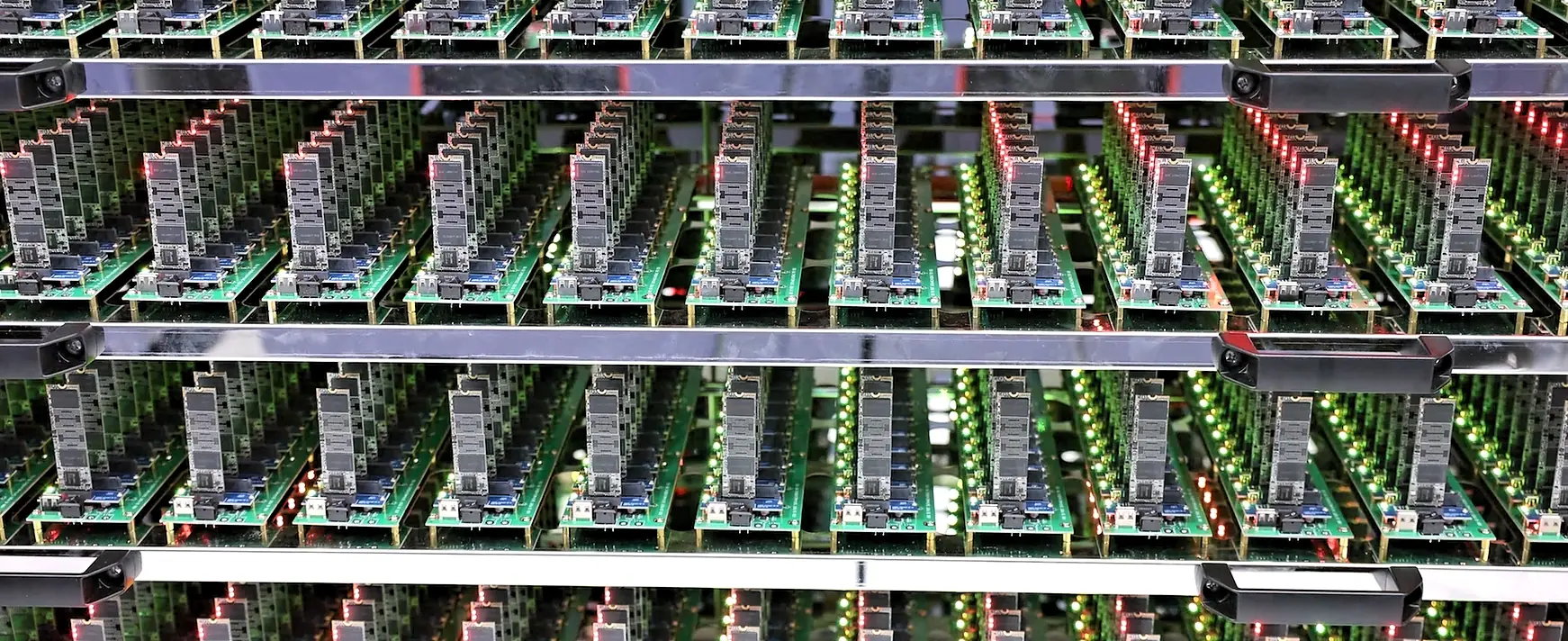
Quality-control activities are applied across incoming material, in-process manufacturing, finished-product inspection and outgoing shipment verification.
IQC — Incoming Quality Control
Incoming materials are reviewed against applicable procurement, configuration and acceptance requirements before release to production.
IPQC — In-Process Quality Control
In-process checks are performed at defined manufacturing stages to identify process deviation before completion of the production lot.
FQC — Final Quality Control
Finished products are reviewed against applicable product specifications and defined inspection requirements prior to release for shipment preparation.
OQC — Outgoing Quality Control
Outgoing inspection verifies applicable shipment information, including product identification, quantity, labelling and packaging requirements before dispatch.
Automated Functional Testing
Automated test equipment is used where applicable to verify module or drive functionality against defined production requirements.
Inspection Stations
Final inspection reviews product identification, appearance and recorded test results before products are approved for packing.
Manufacturing Process
Manufacturing sequence varies according to product architecture and form factor. The following process routes summarize the principal control stages used for memory and storage production; individual steps apply where applicable to the approved production route for a given product.
Material Control
Incoming material checked and released to production
- Incoming material
- IQC inspection
- Material confirmation
- Warehouse control
SMT Assembly
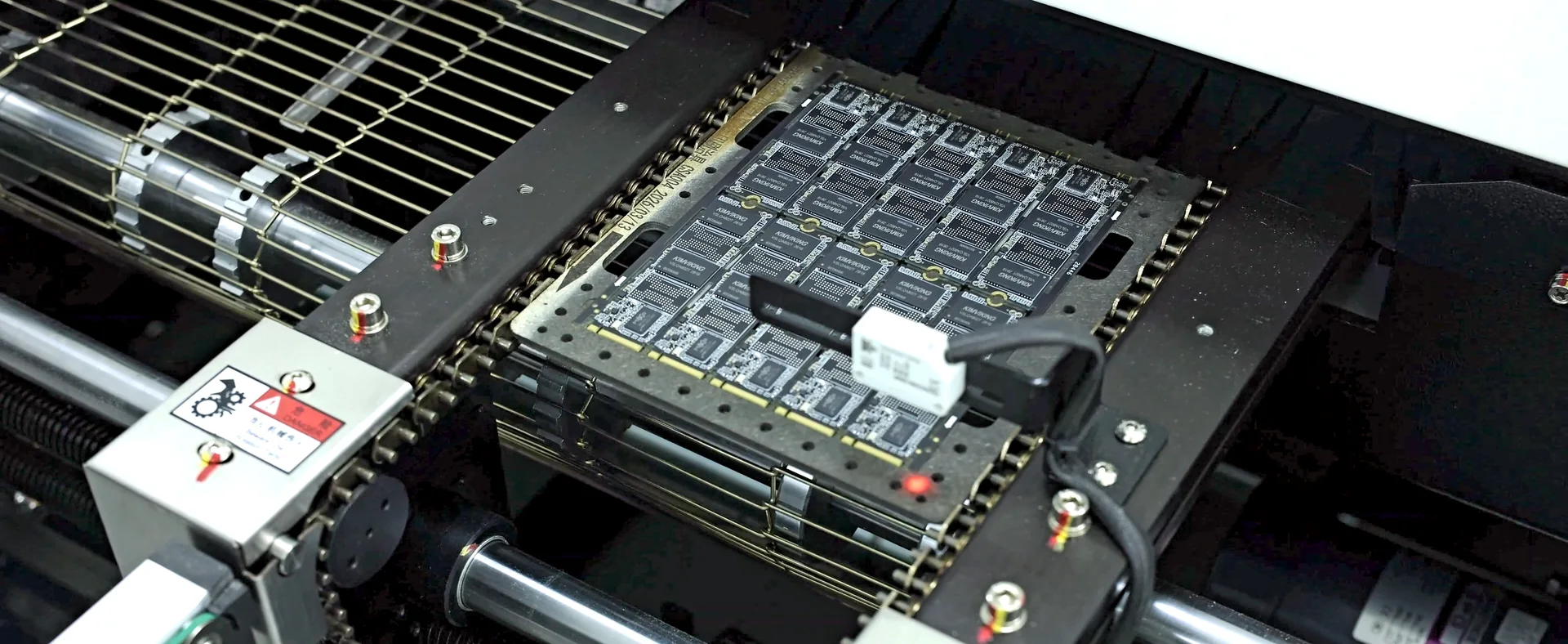
Components mounted and soldered to the module
- Component placement
- SMT inspection
- Soldering inspection
- PCB depaneling
- Visual inspection
SPD Programming & Functional Verification
Module descriptor programmed and module function verified
- SPD programming
- SPD verification
- Module parameters verified against the part specification
Final Inspection & Product Identification
Finished module reviewed against its specification
- Final inspection
- Product identification and labelling
- Appearance inspection
- QC sampling
Packing & Release
Packed and released against the order
- Packing
- Packaging inspection
- Carton packing and sealing
- Finished goods warehouse
Routes above describe the principal control stages rather than a fixed step list. Product-specific operations, including enclosure assembly and thermal-component installation, apply only to the form factors that require them.
Testing & Verification
Verification is carried out at two levels. Production verification confirms manufacturing and functional requirements before product release. Platform qualification evaluates a configuration against a defined target system according to project requirements.
Production Verification — DRAM
Applied to production material before release, where applicable to the approved production route.
Production Verification — Storage
Applied to production material before release, where applicable to the approved production route.
Platform Qualification
Compatibility is evaluated against the target platform configuration, including initialisation behaviour, operating point and the conditions defined for the project. Qualification scope is defined per project and is not performed on every shipped unit.
Performance & Stability Verification
Performance and stability verification is defined according to product type, target workload and project requirements. Temperature-related verification is performed according to the applicable product specification and defined test scope.
Test categories describe verification objectives. The applicable scope, conditions and acceptance criteria for a project are defined in the corresponding test documentation.
Qualification & NPI
Qualification and new product introduction cover the sequence from requirement definition to a repeatable production configuration.
Requirements Definition
Target platform, product configuration and applicable qualification requirements are identified.
Sample Verification
Representative samples are evaluated on the target hardware before production configuration approval.
Platform Qualification
Compatibility and stability are evaluated against the applicable target platform according to project requirements.
NPI / Production Transition
Approved configurations are transferred into repeatable production and quality-control procedures.
Failure Analysis
Failure analysis may be applied to returned products or project issues where reproduction, root-cause investigation and corrective-action review are required.
Issue Reproduction
The reported condition is reproduced where technically feasible, using the platform and operating information provided with the report.
Root-Cause Investigation
The module or drive, the platform configuration and the operating conditions are evaluated to identify the applicable failure mechanism where the available technical evidence supports a determination.
Analysis Report
Verified findings and the supporting technical evidence are documented for engineering review.
Corrective Action Review
Corrective action is defined and its effect verified where required.
Design-In Support
Design-in support covers engineering coordination from product selection through to the transition into production.
Technical Coordination
Engineering review during product selection and platform integration.
Sample Qualification Support
Sample configurations supported through the customer's defined qualification requirements.
Configuration Review
Applicable capacity, interface, form factor and operating requirements reviewed prior to configuration approval.
Production Transition Support
Technical information and approved configuration requirements maintained through the transition to production.
OEM / ODM Configuration
Project-specific memory and storage configurations may be defined according to target platform, form factor, capacity, labelling, packaging and programme requirements. Qualification scope and configuration control are established before production approval.
Configuration Definition
Capacity, form factor and module configuration are defined against the approved platform requirements.
Design-In Support
Engineering review is conducted before design changes require additional requalification effort.
Configuration Control
Qualified configurations are controlled through the agreed programme lifecycle, with changes managed through defined change-control and requalification procedures where required.
Lifecycle Coordination
Supply planning and generation-transition requirements are reviewed against the expected programme lifecycle.
Qualification scope is defined according to target platform, product configuration, operating conditions and programme requirements.
Technical Resources
Project Technical Review
Provide the target platform, required product configuration, operating conditions and qualification requirements. SIMORCHIP engineering will review the applicable verification and technical-support scope.